 QA
QA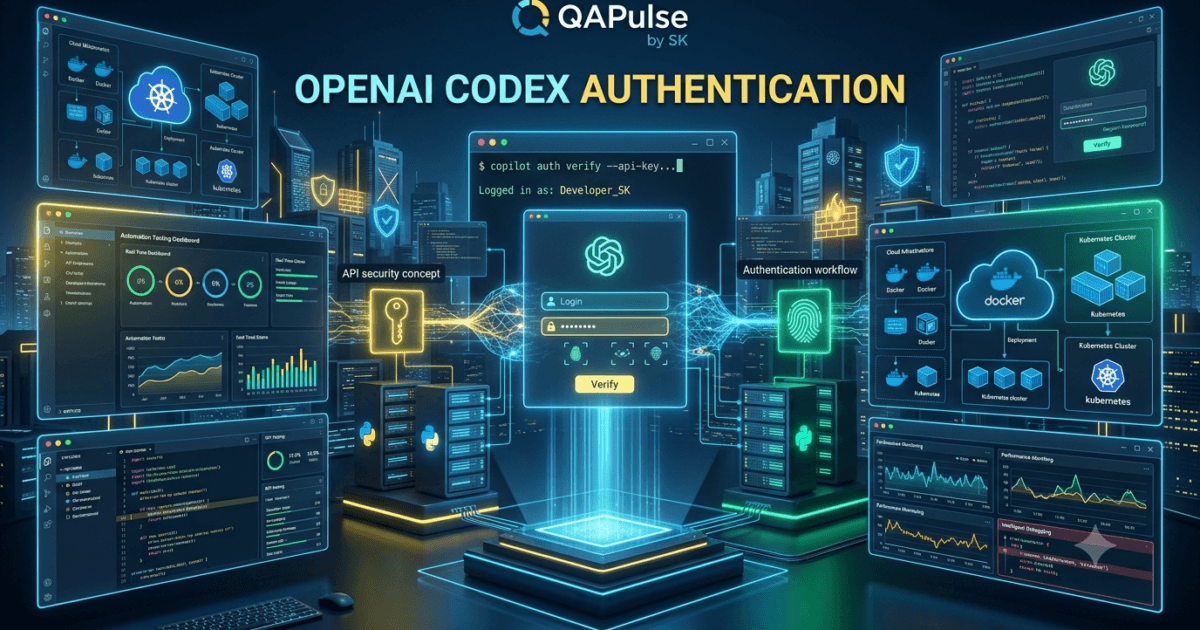
Why OpenAI Codex Authentication Is Essential
Before developers can use AI-assisted coding features inside the OpenAI Codex CLI, the application must securely verify their identity. Authentication is the foundation of every interaction between the local development environment and OpenAI’s services. Without proper authentication, the CLI cannot access AI models, retrieve responses, or perform repository-aware development tasks.
For individual developers, authentication provides seamless access to AI-powered workflows. For organizations, it ensures that only authorized users can access company-approved resources while maintaining accountability, security, and compliance.
Understanding OpenAI Codex Authentication is therefore an essential skill for anyone planning to use Codex in professional software development.
What Is OpenAI Codex Authentication?
OpenAI Codex Authentication is the process of securely verifying a developer’s identity before allowing the OpenAI Codex CLI to communicate with OpenAI services.
Authentication establishes trust between:
- The developer
- The local computer
- The OpenAI Codex CLI
- OpenAI cloud services
Once verification succeeds, the CLI receives the necessary authorization to submit requests, generate AI responses, and interact with supported development workflows.
Authentication occurs only after the user’s identity has been validated using approved credentials.
Why Authentication Matters
Authentication is much more than a simple login screen.
It provides several important benefits:
- Protects developer accounts
- Prevents unauthorized access
- Enables secure API communication
- Associates usage with the correct account
- Supports billing and quota management
- Helps organizations enforce access policies
- Improves auditing and accountability
Without authentication, secure AI-assisted software development would not be possible.
Authentication Workflow
Every authentication session follows a structured security process.
Developer

↓

OpenAI Codex CLI

↓

Authentication Request

↓

Identity Verification

↓

Authorization Granted

↓

Secure AI Session

↓

Development Workflow
This process ensures that only verified users can interact with OpenAI services.
Authentication Methods
Depending on the development environment and organizational requirements, OpenAI Codex Authentication may be completed using different approaches.
Interactive Login
The most common method is an interactive login performed through the CLI.
The developer authenticates using their OpenAI account, after which the CLI establishes a secure session for future requests.
This approach is suitable for individual developers and personal projects.
API-Based Authentication
Some workflows use API credentials instead of interactive login.
This approach is commonly adopted for:
- Automation
- CI/CD pipelines
- Background jobs
- Server environments
- Integration platforms
Proper credential management is essential when using automated authentication.
Organization-Based Authentication
Enterprise environments may integrate authentication with centralized identity management systems.
Benefits include:
- Access control
- Team management
- User auditing
- Centralized permissions
- Security policy enforcement
Organizations often combine authentication with internal governance processes to maintain secure development environments.
Authentication Components
Several components work together during the authentication process.
Identity Verification
The system verifies that the developer is who they claim to be before granting access.
Authorization
After successful verification, permissions determine which resources and services the authenticated user may access.
Secure Communication
All communication between the CLI and OpenAI services occurs through encrypted connections to protect credentials and transmitted data.
Session Management
After authentication, the CLI maintains a secure session so developers can continue working without repeatedly logging in during normal development activities.
Who Needs OpenAI Codex Authentication?
Every developer using the OpenAI Codex CLI must complete authentication before accessing AI-powered functionality.
Typical users include:
- Backend Developers
- Frontend Developers
- Full-Stack Engineers
- QA Automation Engineers
- DevOps Engineers
- Platform Engineers
- AI Engineers
- Cloud Engineers
- Technical Architects
- Computer Science Students
Whether working independently or within a large engineering organization, authentication is the first step toward secure AI-assisted development.
Real-World Importance
As AI becomes an integral part of professional software engineering, secure identity management becomes increasingly important. OpenAI Codex Authentication protects developer accounts, safeguards organizational resources, and enables trusted communication between local development environments and OpenAI services.
By understanding how authentication works and why it is necessary, developers establish a secure foundation for using the OpenAI Codex CLI confidently in both personal and enterprise software development projects.
OpenAI Codex Authentication: Setup, Configuration, and Secure Access
Setting Up OpenAI Codex Authentication
After understanding the purpose of OpenAI Codex Authentication, the next step is learning how to configure it correctly. A secure authentication setup ensures that developers can access AI-powered coding capabilities without interruptions while protecting credentials and maintaining compliance with security best practices.
Whether you are working on a personal project, contributing to an enterprise repository, or integrating AI into automated workflows, establishing authentication correctly is one of the most important steps before using the OpenAI Codex CLI.
Preparing Your Development Environment
Before configuring OpenAI Codex Authentication, verify that your development environment meets the necessary requirements.
Confirm that you have:
- OpenAI Codex CLI installed
- An active OpenAI account
- Stable internet connectivity
- Access to your development repository
- A supported terminal application
- Updated Node.js installation
- Git configured correctly
A properly prepared environment minimizes authentication issues during setup.
Starting the Authentication Process
Most developers begin by opening a terminal inside the project directory and initiating the authentication process.
Example:
codex login
This command starts the authentication flow and securely associates the CLI with your OpenAI account.
After successful verification, the CLI stores the required session information so future requests can be authenticated without repeating the login process during normal development.
Verifying Authentication
After completing the authentication process, developers should verify that the CLI is ready to communicate with OpenAI services.
Common verification activities include:
- Confirming successful login
- Checking CLI status
- Verifying account access
- Testing AI connectivity
- Ensuring repository access
Verifying authentication before beginning development helps prevent interruptions later in the workflow.
Managing Authentication Sessions
A secure session allows developers to work efficiently without repeatedly authenticating.
During a normal development session, developers typically:
- Open the project
- Launch the CLI
- Begin AI-assisted development
- Continue coding while the authenticated session remains active
If a session expires, authentication can be renewed before continuing development.
Using Authentication in Automated Workflows
Many engineering teams automate software development processes using CI/CD pipelines and deployment platforms.
In these environments, OpenAI Codex Authentication may be configured for:
- Continuous Integration
- Continuous Deployment
- Automated testing
- Scheduled development tasks
- Repository maintenance
- AI-assisted automation
Automated environments require careful credential management to ensure security and reliability.
Secure Credential Management
Authentication credentials should always be handled responsibly.
Recommended practices include:
- Store credentials securely.
- Never commit secrets to version control.
- Restrict access to authorized users.
- Rotate credentials when required.
- Remove unused authentication data.
- Follow organizational security policies.
Good credential management protects both developer accounts and organizational resources.
Authentication Workflow
Professional teams generally follow a structured authentication process.
Prepare Environment

↓

Launch Terminal

↓

Start Authentication

↓

Verify Identity

↓

Establish Secure Session

↓

Access OpenAI Services

↓

Begin Development
This repeatable workflow reduces configuration problems and supports secure engineering practices.
Working Across Multiple Projects
Many developers contribute to several repositories throughout the week.
When switching projects:
- Confirm the correct repository.
- Verify the active authentication session.
- Review project permissions.
- Ensure the required account is being used.
- Validate repository access before requesting AI assistance.
Maintaining organized project workflows prevents authentication-related confusion.
Common Configuration Mistakes
Several common mistakes can interrupt OpenAI Codex Authentication.
Using an Incorrect Account
Developers working with multiple OpenAI accounts should verify that the correct account is authenticated before beginning work.
Ignoring Expired Sessions
Authentication sessions eventually expire.
If requests unexpectedly fail, renew the authentication session before troubleshooting other issues.
Storing Credentials Insecurely
Sensitive authentication information should never be stored inside source code, configuration files committed to Git, or publicly accessible repositories.
Always use secure credential management practices.
Skipping Verification
After authentication, confirm that AI requests can be processed successfully before beginning large development tasks.
Verifying connectivity early prevents unnecessary interruptions during implementation.
Practical Recommendations
Developers who consistently achieve reliable results with OpenAI Codex Authentication establish secure habits from the beginning of every project. They prepare their development environment, authenticate using the correct account, verify successful access before writing code, protect credentials using secure storage methods, monitor session status during long development sessions, and follow organizational security policies when working across multiple repositories. These practices create a stable and secure foundation for AI-assisted software development while reducing authentication failures and protecting sensitive development resources.
OpenAI Codex Authentication: Enterprise Security, API Credentials, and Real-World Authentication Workflows
Using OpenAI Codex Authentication in Professional Development
After successfully configuring OpenAI Codex Authentication, developers can begin integrating AI into their everyday software engineering workflow. However, authentication is not a one-time activity that can be forgotten after installation. In professional environments, authentication plays an ongoing role in protecting repositories, managing developer access, supporting automation, and ensuring secure communication with OpenAI services.
Whether working individually or within a large engineering organization, understanding how authentication fits into real-world development workflows is essential for maintaining both productivity and security.
Authentication During Daily Development
A typical development session starts with an authenticated environment before any AI-powered request is submitted.
Developers commonly perform the following sequence:
- Open the development environment
- Navigate to the project repository
- Verify authentication status
- Launch the OpenAI Codex CLI
- Begin AI-assisted development
- Review generated responses
- Run automated tests
- Commit validated changes
By authenticating at the beginning of the workflow, developers reduce interruptions during feature implementation.
Authentication in Large Engineering Teams
Enterprise software projects often involve dozens or hundreds of developers working on shared repositories.
In these environments, OpenAI Codex Authentication helps organizations manage:
- Developer identity
- Repository permissions
- Resource access
- Usage auditing
- Security policies
- Team governance
Instead of relying on shared credentials, every developer should authenticate using their own authorized account to improve accountability and traceability.
Supporting CI/CD Pipelines
Many organizations automate development through Continuous Integration and Continuous Deployment pipelines.
Authentication enables AI-assisted automation in environments such as:
- Build pipelines
- Test automation
- Documentation generation
- Repository maintenance
- Deployment validation
- Code quality analysis
When automation requires access to OpenAI services, credentials should be managed securely using approved secret management solutions rather than hardcoded values.
Authentication Workflow in Enterprise Projects
A structured authentication process improves consistency across development teams.
Developer Login

↓

Identity Verification

↓

Access Approval

↓

OpenAI Codex Authentication

↓

Repository Access

↓

AI-Assisted Development

↓

Testing

↓

Deployment
Following a standardized workflow helps organizations enforce security policies while reducing authentication-related issues.
Managing API Credentials
Some automation scenarios rely on API credentials instead of interactive login.
When working with API-based authentication:
- Generate credentials only when required.
- Restrict access using least-privilege principles.
- Rotate credentials periodically.
- Revoke unused credentials immediately.
- Monitor usage activity.
- Protect credentials with secure storage mechanisms.
Proper credential management minimizes security risks while supporting automated workflows.
Authentication Across Multiple Devices
Developers frequently work from different environments, including:
- Office workstations
- Home computers
- Development servers
- Virtual machines
- Cloud workspaces
Each environment should be authenticated independently using approved security practices. Avoid copying authentication data directly between systems unless supported by official tools and organizational policies.
Monitoring Authentication Health
Successful authentication is only part of maintaining a secure development environment.
Engineering teams should periodically review:
- Active authenticated sessions
- Authorized devices
- Credential expiration
- Account permissions
- Access logs
- Security alerts
Regular monitoring helps identify unauthorized access attempts and supports proactive security management.
Common Authentication Mistakes
Several common mistakes reduce the effectiveness of OpenAI Codex Authentication.
Sharing Authentication Credentials
Authentication should always be personal.
Sharing accounts or credentials makes auditing difficult and increases security risks.
Hardcoding Secrets
Embedding credentials directly inside application source code or configuration files exposes sensitive information and should always be avoided.
Ignoring Access Reviews
Developer permissions should be reviewed regularly to ensure that only authorized users retain access to OpenAI services.
Neglecting Credential Rotation
Long-lived credentials increase exposure if they are ever compromised.
Organizations should establish regular rotation policies for API credentials and other authentication secrets.
Security Recommendations
To maintain a secure authentication environment, developers should:
- Use strong account security practices.
- Protect authentication credentials.
- Verify authorized devices.
- Authenticate only through approved methods.
- Review account activity regularly.
- Follow organizational compliance requirements.
- Report suspicious authentication activity immediately.
These practices reduce the likelihood of unauthorized access while maintaining reliable AI-assisted development.
Practical Recommendations
Teams that successfully implement OpenAI Codex Authentication treat identity management as an integral part of the software development lifecycle rather than a one-time configuration task. They authenticate every developer individually, secure API credentials using dedicated secret management solutions, monitor authentication activity across development environments, integrate authentication safely into CI/CD pipelines, review permissions regularly, and enforce organizational security standards before granting access to AI-powered development tools. This disciplined approach enables organizations to scale AI-assisted software engineering while protecting repositories, developer accounts, and sensitive business assets.
OpenAI Codex Authentication: Best Practices, Security, Troubleshooting, and Enterprise Governance
Building a Secure Authentication Strategy
As AI becomes an integral part of modern software engineering, authentication is no longer just a setup step—it is a continuous security process. OpenAI Codex Authentication ensures that only authorized developers can access AI-powered development capabilities while protecting repositories, credentials, and organizational resources.
Successful engineering teams treat authentication as part of their overall software development lifecycle. Alongside coding standards, testing, and version control, secure authentication helps organizations maintain compliance, reduce security risks, and support responsible AI adoption.
A well-designed authentication strategy improves both developer productivity and organizational security.
Best Practices for OpenAI Codex Authentication
Authenticate with Individual Accounts
Every developer should authenticate using their own authorized OpenAI account.
Using individual accounts provides:
- Better accountability
- Accurate usage tracking
- Easier permission management
- Improved security auditing
- Clear ownership of development activities
Shared accounts should be avoided whenever possible.
Keep Authentication Credentials Secure
Authentication credentials should always be treated as sensitive information.
Recommended practices include:
- Store credentials securely.
- Use approved secret management solutions.
- Restrict access to authorized personnel.
- Remove unused credentials immediately.
- Rotate secrets according to organizational policies.
Protecting credentials is one of the most important responsibilities when using AI-assisted development tools.
Review Authentication Regularly
Authentication should not be configured once and forgotten.
Engineering teams should periodically verify:
- Active sessions
- Authorized devices
- Account permissions
- Credential expiration
- API access
- Security logs
Regular reviews help identify outdated access and improve overall security.
Authentication and Secure Development Workflow
Professional development teams often integrate authentication into a repeatable engineering workflow.
Prepare Environment

↓

Authenticate User

↓

Verify Access

↓

Launch OpenAI Codex

↓

Develop Features

↓

Run Automated Tests

↓

Review Code

↓

Deploy Securely
Following a consistent process reduces authentication-related issues while improving development efficiency.
Troubleshooting Authentication Problems
Developers occasionally encounter authentication-related issues during development.
Common causes include:
- Expired authentication sessions
- Incorrect account selection
- Network connectivity problems
- Outdated CLI installation
- Invalid configuration
- Insufficient permissions
Rather than modifying configuration files immediately, developers should verify the basic authentication status before investigating more advanced causes.
Maintaining Secure API Credentials
Projects that use automated workflows often rely on API-based authentication.
To maintain security:
- Limit credential scope.
- Rotate API credentials regularly.
- Remove unused credentials.
- Monitor credential usage.
- Separate development and production environments.
- Restrict credential access to authorized systems.
These practices reduce exposure if credentials are ever compromised.
Supporting Enterprise Governance
Large organizations frequently establish governance policies for AI-assisted development.
OpenAI Codex Authentication supports these initiatives by helping organizations manage:
- User identity
- Access control
- Permission management
- Compliance requirements
- Security auditing
- Resource accountability
Authentication becomes one component of a broader enterprise AI governance strategy.
Common Authentication Mistakes
Sharing Developer Accounts
Shared accounts reduce accountability and make auditing more difficult.
Every developer should use their own authenticated identity.
Exposing Credentials
Credentials should never be stored inside:
- Source code
- Public repositories
- Documentation
- Screenshots
- Shared chat messages
Sensitive information must always remain protected.
Ignoring Permission Reviews
Over time, developers change roles, leave projects, or move between teams.
Organizations should regularly review authentication permissions to ensure access remains appropriate.
Forgetting Session Management
Long-running development environments may eventually require reauthentication.
Developers should understand how to recognize expired sessions and restore authenticated access without interrupting ongoing work.
Measuring Authentication Success
Engineering organizations often evaluate authentication processes using measurable indicators.
| Metric | Why It Matters |
|---|---|
| Successful Authentication Rate | Measures reliability of login workflows |
| Failed Authentication Attempts | Helps identify security or configuration issues |
| Credential Rotation Compliance | Ensures secrets remain current |
| Unauthorized Access Incidents | Measures effectiveness of security controls |
| Developer Onboarding Time | Evaluates authentication setup efficiency |
| Authentication Support Requests | Highlights recurring configuration problems |
| Security Audit Results | Confirms compliance with organizational policies |
Monitoring these metrics allows organizations to continuously improve authentication processes while reducing operational risks.
Long-Term Authentication Strategy
As AI adoption expands across software engineering, authentication will remain a critical component of secure development. Teams that establish strong authentication practices today are better prepared to scale AI-assisted workflows in the future.
Successful organizations consistently:
- Authenticate every developer individually.
- Protect credentials throughout their lifecycle.
- Enforce least-privilege access.
- Review permissions regularly.
- Integrate authentication into CI/CD securely.
- Monitor authentication activity continuously.
- Train developers on security responsibilities.
- Align authentication policies with organizational governance.
These practices help maintain a secure and trustworthy AI development environment.
Key Takeaways
OpenAI Codex Authentication provides the secure foundation required for AI-assisted software development. By combining strong identity verification, responsible credential management, regular access reviews, secure automation practices, and enterprise governance, developers and organizations can confidently integrate AI into their engineering workflows. When authentication is treated as an ongoing security process rather than a one-time configuration step, it supports productivity, protects sensitive resources, and enables the responsible adoption of AI across software development teams.
Internal Links:
- Learn MCP – Zero to Hero
- Learn AI Agents for QA – Zero to Hero
- Playwright Automation – Zero to Hero
- Learn Python – Zero to Hero
- OpenAI Codex: Complete Zero to Hero
- Cursor AI: Complete Zero to Hero
- Claude Code Tutorial: Complete Zero to Hero
- Free QA Resources Built From Real Experience
- QA Glossary: Test Automation Terms Every Engineer Should Know
External Resources:
- OpenAI Codex – Get Started: OpenAI Codex Get Started
- OpenAI Codex CLI – Getting Started: OpenAI Codex CLI Guide
- OpenAI Codex GitHub Repository: OpenAI Codex GitHub Repository
- Using OpenAI Codex with ChatGPT: Using Codex with ChatGPT
- OpenAI Codex CLI Authentication: Codex CLI Sign-in Guide
People Also Ask
What is OpenAI Codex Authentication?
OpenAI Codex Authentication is the secure process of verifying a developer’s identity before the OpenAI Codex CLI can access OpenAI services for AI-assisted software development.
Why is OpenAI Codex Authentication important?
Authentication protects developer accounts, secures API access, enables repository-aware AI features, and ensures that only authorized users can interact with OpenAI services.
Can OpenAI Codex Authentication be used in CI/CD pipelines?
Yes. Automated development environments can use secure API credentials and secret management solutions to authenticate AI-powered workflows while following organizational security policies.
How do I secure OpenAI Codex Authentication credentials?
Store credentials in approved secret management systems, avoid committing them to version control, rotate them regularly, restrict access using least-privilege principles, and monitor usage activity.
Should every developer authenticate individually?
Yes. Individual authentication improves accountability, simplifies auditing, strengthens access control, and aligns with enterprise security best practices.
Featured Snippet
What Is OpenAI Codex Authentication?
OpenAI Codex Authentication is the identity verification process that securely connects the OpenAI Codex CLI with an authorized OpenAI account. After successful authentication, developers can access AI-powered coding features, repository-aware assistance, and secure software development workflows.
AI Overview Answer
OpenAI Codex Authentication enables developers to securely access AI-assisted coding capabilities by verifying identity before allowing communication with OpenAI services. It supports interactive login, API-based authentication, enterprise identity management, secure automation, and responsible access control for modern software engineering teams.
Enjoyed this article? Explore more in-depth guides on AI engineering, automation testing, Model Context Protocol, Playwright, and intelligent software quality at www.skakarh.com. Follow QAPulse by SK for practical, production-focused tutorials designed for QA engineers, SDETs, and AI developers.