 QA
QAAI Engineering
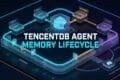
TencentDB agent memory lifecycle determines how Agent memories are created, updated, superseded, retrieved, and expired. Learn how to build reliable memory management…

Build durable AI agents using step checkpointing, strict tool schemas, and persistent memory systems. These seven proven steps ensure instant automated crash…
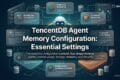
TencentDB Agent Memory Configuration determines how memory is retrieved, bounded, stored, secured, and validated. Learn the essential settings and how to tune…
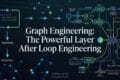
Graph engineering extends traditional loop-based thinking by modeling relationships, states, transitions, dependencies, retries, and execution paths across complex software systems.
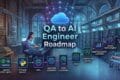
The transition from QA to AI Engineer does not require starting your career over. Learn how automation, APIs, CI/CD, testing, and debugging…
PyTorch 2.13.0 introduces major changes across FlexAttention, distributed training, memory efficiency, deterministic computation, and Python 3.15 support. This guide explains what the…

Selenium 4.47.0 is now available with continued WebDriver BiDi development, transport-layer improvements, event subscription enhancements, and language-specific fixes. This practical guide explains…
AutoGen is a framework for building AI-agent applications and multi-agent systems. Learn what AutoGen is, how AI agents work, why multiple agents…
Claude Code is evolving beyond code generation into agentic software engineering. Learn how to build controlled workflows for repository exploration, planning, implementation,…
MCP Elicitation enables safer AI agents by requesting user input, validating decisions, and controlling high-impact MCP actions.