 QA
QA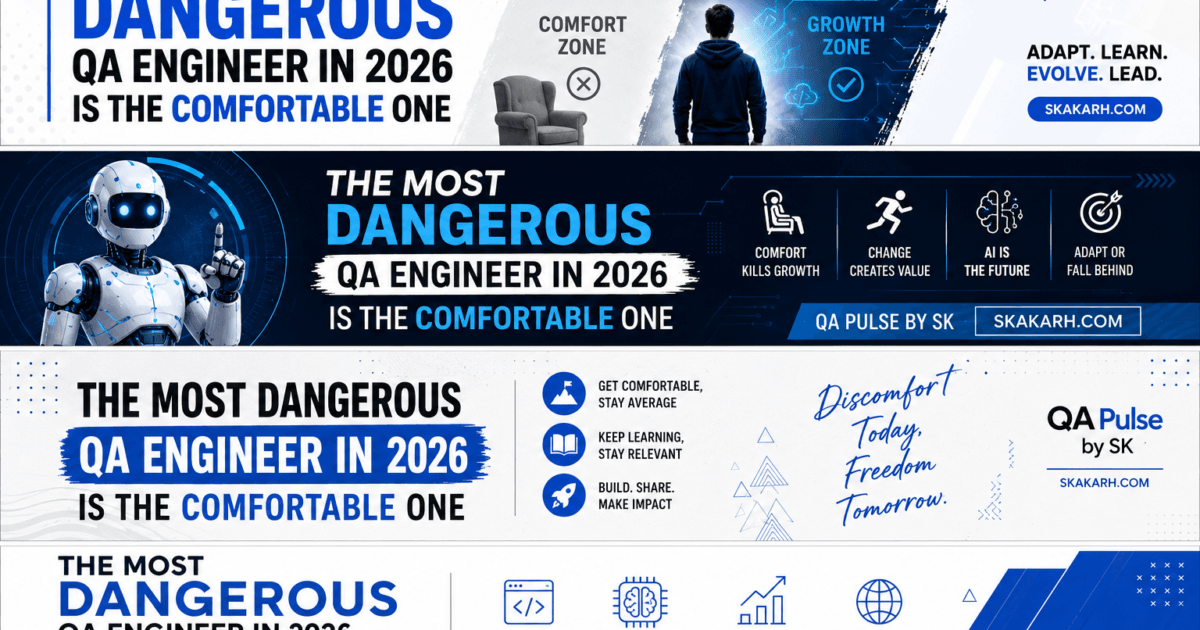
The Most Dangerous QA Engineer in 2026 Is Not the Weakest One
The most dangerous QA engineer in 2026 is not:
- the beginner
- the junior tester
- the engineer still learning automation
It’s the engineer who became:
too comfortableThat comfort quietly becomes:
- stagnation
- outdated thinking
- resistance to change
- slow adaptation
- invisible career decline
And honestly?
Many engineers don’t even realize it’s happening.
Why Comfort Is Becoming a Career Risk for QA Engineers
The software industry is changing faster than ever.
AI is changing workflows.
Automation is evolving rapidly.
Engineering expectations are expanding beyond traditional testing.
Modern QA teams increasingly work with:
- AI-assisted engineering
- intelligent automation
- observability systems
- distributed architectures
- workflow orchestration
- autonomous pipelines
But many engineers still operate with:
2019 thinking in a 2026 industry
That gap becomes dangerous over time.
Comfortable QA Engineers Stop Experimenting
This is one of the earliest warning signs.
A comfortable QA engineer often:
- stops building side projects
- avoids learning new systems
- resists architectural thinking
- ignores AI trends
- repeats the same workflows for years
Eventually:
growth slows silently.
The strongest engineers continuously:
✅ experiment
✅ adapt
✅ rebuild
✅ evolve
✅ explore uncomfortable systems
Because modern engineering rewards:
👉 adaptability
More than routine execution.
Why AI Is Increasing Pressure on Comfortable Engineers
AI is not replacing engineers overnight.
But AI is absolutely changing:
- workflow speed
- debugging expectations
- productivity standards
- automation design
- information retrieval
- engineering efficiency
That means modern QA engineers increasingly need:
✅ AI awareness
✅ systems thinking
✅ workflow intelligence
✅ observability understanding
✅ adaptive engineering habits
A comfortable engineer who ignores these shifts may eventually become:
slow compared to modern workflows
Even if technically experienced.
The Dangerous Illusion of “I Already Know Enough”
This mindset quietly destroys careers.
Some engineers believe:
I already know Selenium
I already know Cypress
I already know automation
But modern QA engineering is no longer only about:
- test scripts
- assertions
- locators
- regression suites
The industry is shifting toward:
- intelligent systems
- telemetry
- observability
- AI-assisted workflows
- adaptive automation
- autonomous orchestration
That means the learning curve never truly stops.
Comfortable QA Engineers Often Avoid Systems Thinking
This becomes a massive limitation at senior levels.
Many engineers stay trapped at:
test case thinking
instead of evolving toward:
system-level engineeringModern engineering increasingly requires understanding:
- architecture
- infrastructure
- distributed systems
- reliability engineering
- observability pipelines
- workflow orchestration
Because testing itself is evolving into:
intelligent engineering systems
Not isolated automation tasks.
The Best QA Engineers Stay Uncomfortable
This is the real difference.
The strongest engineers intentionally:
- challenge themselves
- learn difficult systems
- explore new tooling
- build public projects
- study architecture
- experiment with AI workflows
They continuously place themselves in:
growth environments
instead of comfort environments.
That mindset compounds massively over time.
Why Public Learning Matters More in 2026
Modern visibility is becoming a major engineering advantage.
Many engineers still:
- learn privately
- build privately
- struggle privately
But modern QA leaders increasingly:
✅ publish blogs
✅ share frameworks
✅ build GitHub projects
✅ document experiments
✅ discuss failures publicly
Public learning accelerates:
- credibility
- networking
- opportunities
- adaptability
- engineering confidence
And honestly?
It also forces continuous growth.
Comfort Creates Invisible Technical Debt
This is something most engineers never discuss.
Comfort creates:
- outdated workflows
- stagnant thinking
- weak adaptability
- resistance to modern systems
Eventually this becomes:
career technical debt
And like software debt:
it compounds quietly.
The Future Belongs to Adaptive QA Engineers
Modern QA engineers increasingly need:
- AI awareness
- observability knowledge
- systems thinking
- debugging intelligence
- workflow orchestration
- adaptive engineering skills
Because future engineering environments will reward:
👉 adaptability
far more than:
👉 routine repetition
That shift is already happening now.
Why the Comfortable QA Engineer Becomes Dangerous
A comfortable QA engineer may slowly stop adapting to modern engineering trends like AI-assisted workflows, observability systems, intelligent automation, and distributed architectures. As software engineering rapidly evolves in 2026, modern QA engineers increasingly need systems thinking, workflow intelligence, adaptive learning habits, and architectural awareness. Engineers who remain too comfortable risk stagnation, slower career growth, and reduced relevance in increasingly AI-native software development environments.
External Resources
Let’s Talk
👉 What do you think causes engineers to become too comfortable?
👉 Which new skill should every QA engineer start learning today?
Drop your thoughts below 👇
Final Line
The engineers who survive the future will not be the most comfortable ones.
They will be the ones most willing to evolve.
More Relevant Articles
- Why Most Test Automation Frameworks Collapse at Scale
- Most QA Engineers Are Learning the Wrong Skills in 2026
- 9 Brutal Habits Destroying Software Testers in 2026