 QA
QA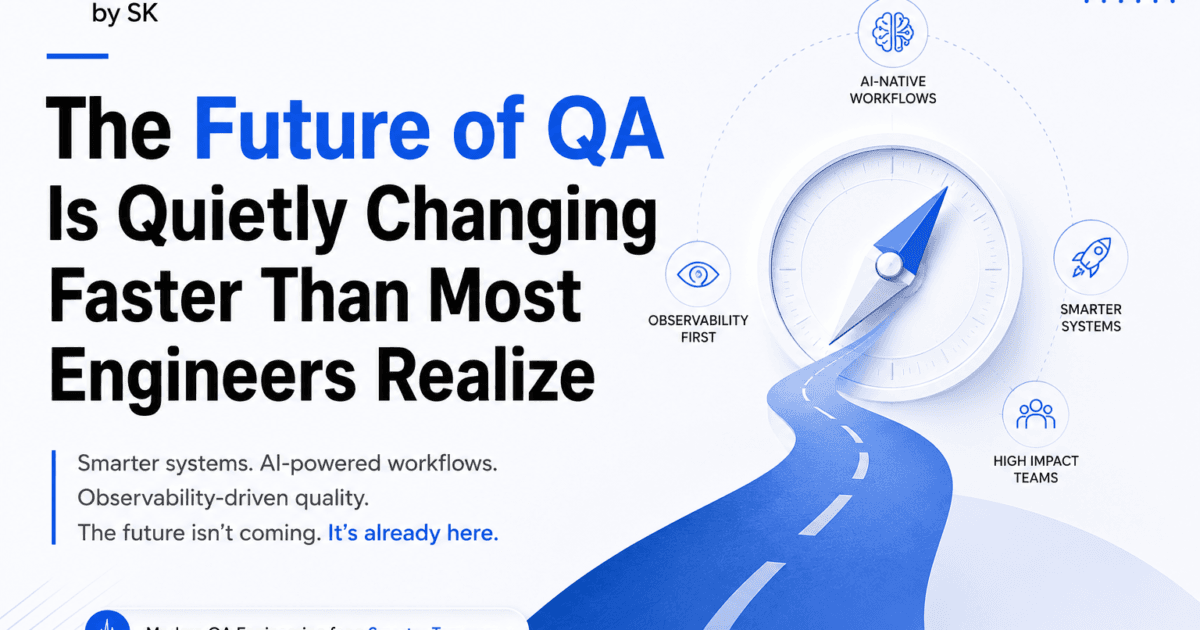
The Future of QA is Quietly Changing Faster Than Most Engineers Realize
For years, many companies scaled QA using:
- bigger testing teams
- larger regression suites
- more manual execution
- heavier process layers
That model is slowly breaking.
Not because testing disappeared.
But because software systems themselves changed.
The future of QA is increasingly moving toward:
smaller teams
smarter systems
faster intelligence
And honestly?
Most engineers still underestimate how big this shift is becoming.
Modern QA Teams Are Becoming Engineering Multipliers
A few years ago, large QA organizations often depended on:
- repetitive execution
- manual coordination
- centralized testing flows
- isolated automation teams
Modern engineering environments now prioritize:
- speed
- observability
- autonomous workflows
- adaptive automation
- AI-assisted debugging
- intelligent orchestration
That means the strongest QA teams increasingly operate like:
👉 high-leverage engineering systems
Not:
👉 execution factories
Huge difference.
Why the Future of QA Is Shifting Toward Smaller Teams
Modern tooling is changing productivity dramatically.
Today, a smaller team with:
- strong architecture
- observability systems
- AI workflows
- intelligent automation
- scalable pipelines
can often outperform:
much larger traditional QA organizationsBecause modern software delivery increasingly rewards:
✅ engineering leverage
✅ adaptability
✅ intelligent systems
✅ automation quality
Not:
❌ sheer team size
The Real Power Shift is Happening Through Systems
This is the most important trend.
The future of QA is no longer only about:
- writing test cases
- executing regression suites
- scaling manual validation
Instead, modern QA increasingly focuses on:
- intelligent pipelines
- telemetry systems
- observability
- AI-assisted workflows
- autonomous orchestration
- reliability engineering
That means:
systems are becoming more important than headcountAI is Increasing Engineering Leverage
AI is not simply replacing testers.
It is increasing:
👉 engineering amplification
Modern QA engineers can now use AI for:
- debugging assistance
- log analysis
- failure clustering
- test generation
- anomaly detection
- workflow orchestration
- root cause analysis
This dramatically changes team efficiency.
One strong engineer with:
- observability
- AI workflows
- automation intelligence
may eventually outperform:
multiple traditional execution-based rolesThat shift is already beginning.
Why Observability is Becoming Central to the Future of QA
This is massively underrated.
Traditional QA focused heavily on:
did the test pass?Modern systems increasingly require understanding:
why did the system behave this way?That difference changes everything.
Modern QA teams increasingly rely on:
- traces
- metrics
- logs
- runtime visibility
- telemetry systems
- distributed monitoring
Because intelligent debugging is becoming more valuable than:
👉 raw test volume
Smaller QA Teams Require Stronger Engineers
This is the uncomfortable reality.
As teams become smaller:
individual engineering capability matters more.
Future-ready QA engineers increasingly need:
✅ systems thinking
✅ debugging intelligence
✅ AI awareness
✅ architecture understanding
✅ workflow orchestration
✅ observability knowledge
The industry is gradually shifting from:
task executiontoward:
engineering leverageWhy Legacy QA Structures are Struggling
Many traditional QA organizations still operate around:
- approval chains
- manual coordination
- fragmented ownership
- isolated testing silos
But modern software systems increasingly move too fast for:
heavy operational frictionThat’s why many companies are increasingly investing in:
- platform engineering
- intelligent automation
- AI workflows
- observability-first systems
- autonomous tooling
instead of endlessly scaling manual execution layers.
The Future of QA will Reward Adaptive Engineers
The future of QA will increasingly favor engineers who can:
- design systems
- understand architecture
- debug intelligently
- orchestrate workflows
- integrate AI systems
- adapt rapidly
Not engineers who only memorize:
- framework syntax
- repetitive workflows
- isolated tooling
Because future software engineering environments will increasingly prioritize:
👉 adaptability over repetition
What Smart QA Teams are Building Right Now
The strongest modern QA teams increasingly invest in:
- AI-native workflows
- observability platforms
- intelligent retries
- adaptive automation
- telemetry pipelines
- distributed execution systems
They understand something important:
future scale comes from systems
not headcount
That mindset is becoming a major competitive advantage.
Why the Future of QA is Smaller Teams With Smarter Systems
The future of QA is shifting toward smaller, highly capable engineering teams powered by intelligent automation, AI-assisted workflows, observability platforms, and scalable system design. Modern QA organizations increasingly prioritize engineering leverage, adaptive automation, debugging intelligence, and workflow orchestration instead of simply expanding team size. As software systems become more distributed and AI-native in 2026, future-ready QA engineers increasingly need systems thinking, architecture awareness, and intelligent automation capabilities.
More Relevant Articles
- Why Most Test Automation Frameworks Collapse at Scale
- AI Agents vs Agentic AI — Stop Confusing These Concepts (90% of Developers Get It Wrong)
- RAG Powered Performance Testing: Real-Time API Behavior Feeds Your k6 Tests
External Resources
Let’s Talk
👉 Do you think QA teams will become smaller in the next 5 years?
👉 Which skill will matter most in the future of QA?
Drop your thoughts below 👇
Final Line
The future of QA will not belong to the teams with the most people.
It will belong to the teams with the smartest systems.