 QA
QA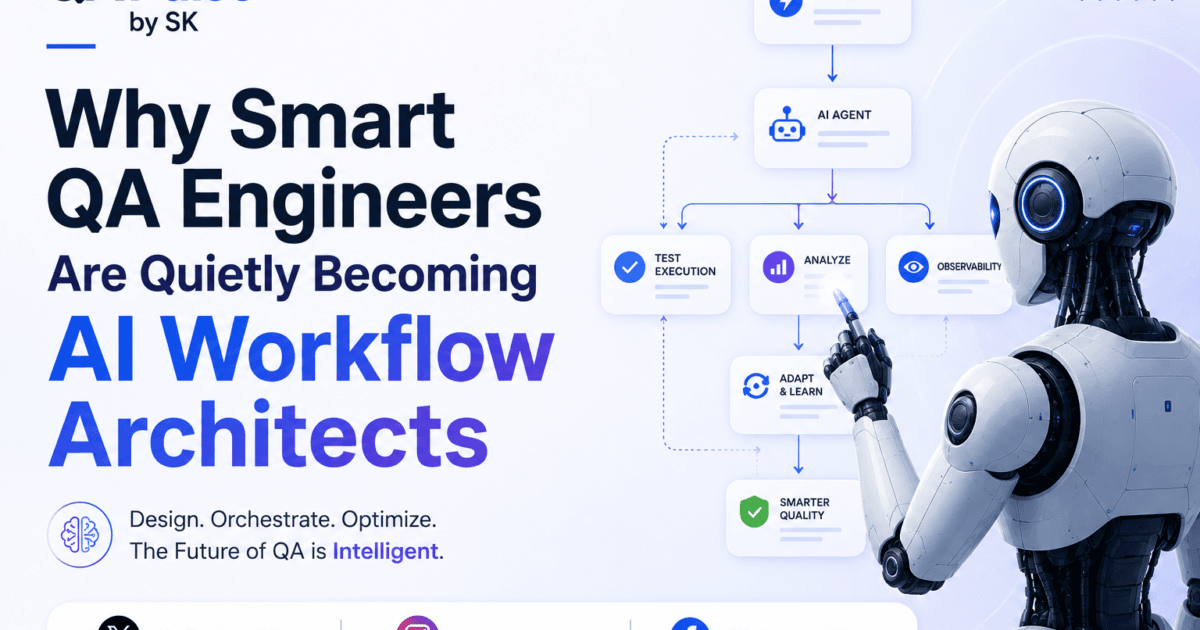
AI Workflow Architects Are Quietly Becoming the Future of QA
Most people still think QA engineering is mainly about:
- writing test cases
- automating regression suites
- validating UI flows
- reporting bugs
But something much bigger is happening quietly inside modern engineering teams.
Some of the smartest QA engineers are evolving into:
AI workflow architects
And honestly?
This shift may completely redefine software testing careers over the next few years.
Instead of only testing applications, modern engineers increasingly design:
- intelligent workflows
- autonomous pipelines
- adaptive debugging systems
- AI-assisted orchestration
- self-improving automation ecosystems
That is a completely different level of engineering responsibility.
Why AI Workflow Architects Are Emerging So Fast
Modern software systems are becoming:
- distributed
- event-driven
- AI-assisted
- continuously deployed
- increasingly autonomous
Traditional automation alone struggles to manage this complexity efficiently.
That’s why companies increasingly need engineers who can design:
systems that coordinate intelligence
not only execute scripts.
Modern workflows increasingly involve:
- AI agents
- orchestration layers
- retrieval systems
- telemetry pipelines
- observability tools
- adaptive execution logic
This is where AI workflow architects are becoming extremely valuable.
How QA Engineering is Quietly Changing
The role of QA engineering is evolving faster than many people realize.
A few years ago, automation success often meant:
- more scripts
- more coverage
- more test cases
Now engineering teams increasingly prioritize:
- intelligent execution
- debugging visibility
- workflow reliability
- orchestration systems
- AI-assisted analysis
- adaptive pipelines
That changes the role of QA engineers significantly.
Modern QA engineers increasingly act like:
👉 systems engineers
👉 automation architects
👉 observability specialists
👉 AI workflow designers
instead of only:
👉 test executors
Why Automation Alone is No Longer Enough
This is becoming one of the biggest shifts in modern QA.
Traditional automation frameworks often struggle with:
- flaky systems
- distributed environments
- dynamic UI layers
- AI-generated interfaces
- unpredictable workflows
Simply adding:
more automated tests
does not solve those problems anymore.
Modern engineering increasingly requires:
- adaptive automation
- intelligent retries
- semantic validation
- autonomous orchestration
- AI-assisted debugging
That is why AI workflow architects are becoming increasingly important.
The Rise of Intelligent Workflow Systems
Modern software delivery pipelines are becoming highly intelligent.
Today, workflows can increasingly:
- trigger actions autonomously
- analyze failures automatically
- route debugging intelligently
- classify issues semantically
- coordinate execution adaptively
This moves QA engineering toward:
workflow intelligence
instead of only test execution.
Future-ready engineering teams increasingly invest in:
- AI-native pipelines
- telemetry systems
- orchestration engines
- intelligent automation platforms
- adaptive debugging systems
Because intelligent workflows scale far better than manual coordination.
Why Observability Matters for AI Workflow Architects
As workflows become smarter:
debugging complexity also increases.
Without observability:
AI systems quickly become:
unmanageable black boxes
That’s why modern AI workflow architects increasingly rely on:
- distributed traces
- runtime telemetry
- execution graphs
- event monitoring
- reasoning visibility
- intelligent diagnostics
Observability is rapidly becoming one of the most valuable skills in future QA engineering.
Because intelligent systems require:
👉 intelligent visibility
Skills Modern AI Workflow Architects Need
The strongest future-ready engineers increasingly combine:
- automation
- systems thinking
- AI awareness
- debugging intelligence
- observability
- architecture knowledge
Modern AI workflow architects increasingly understand:
- orchestration frameworks
- AI agents
- event-driven systems
- retrieval workflows
- telemetry pipelines
- adaptive automation logic
This is very different from traditional:
test case execution thinkingAnd honestly?
That difference is becoming a major career advantage.
Why Smaller Teams Need AI Workflow Architects
The future of engineering is increasingly about:
engineering leverage
not simply:
team size
Smaller modern teams increasingly depend on:
- smarter tooling
- intelligent workflows
- AI-assisted debugging
- adaptive automation systems
That means companies increasingly value engineers who can:
- design scalable workflows
- orchestrate intelligent systems
- integrate AI capabilities
- optimize automation ecosystems
Those engineers are becoming extremely high leverage.
How QA Engineers Can Start Transitioning Today
You do NOT need to become an AI researcher overnight.
But modern QA engineers should increasingly explore:
- AI agents
- orchestration systems
- observability platforms
- workflow automation
- telemetry pipelines
- semantic validation
- adaptive debugging
A good starting point is building:
- intelligent CI/CD flows
- AI-assisted debugging tools
- semantic assertion systems
- automation orchestration layers
Even small experiments create massive learning momentum over time.
Why AI Workflow Architects Are Becoming the Next Evolution of QA
AI workflow architects are emerging as modern engineering teams increasingly rely on intelligent automation, adaptive workflows, observability systems, and AI-assisted orchestration. As software systems become more distributed and autonomous in 2026, modern QA engineers increasingly need systems thinking, telemetry visibility, workflow intelligence, and architectural awareness. Future-ready engineers who understand intelligent orchestration and adaptive automation will likely become some of the most valuable contributors in modern software engineering organizations.
More Related Blogs
- Learn MCP – Zero to Hero
- Learn AI Agents for QA – Zero to Hero
- Playwright Automation – Zero to Hero
- TencentDB Agent Memory: Complete Zero to Hero
- LangGraph: Complete Zero to Hero
- Learn Python – Zero to Hero
- OpenAI Codex: Complete Zero to Hero
- Cursor AI: Complete Zero to Hero
- Claude Code Tutorial: Complete Zero to Hero
- AutoGen: Complete Zero to Hero Guide
- Free QA Resources Built From Real Experience
- QA Glossary: Test Automation Terms Every Engineer Should Know
External Resources
Let’s Talk
👉 Do you think QA engineers will eventually become workflow architects?
👉 Which AI workflow skill do you want to learn first?
Drop your thoughts below 👇
Final Line
The future of QA will not belong to engineers who only automate tests.
It will belong to engineers who orchestrate intelligent systems.