 QA
QA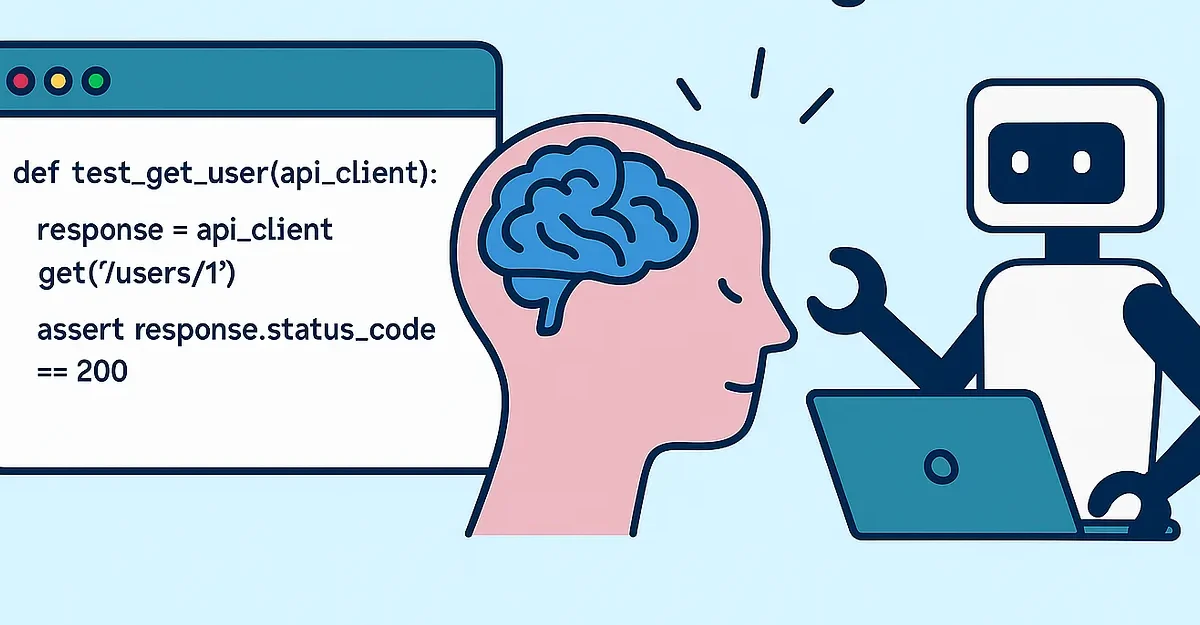
Software testing is no longer just about writing and running test scripts.
What used to be a manual, repetitive process is now evolving into something far more powerful:
👉 Autonomous API Test Agents
In 2026, testing is not just:
pytest -q
It’s a continuous loop of:
- Execution
- Analysis
- Learning
- Self-improvement
Powered by pytest and intelligent agents built using Microsoft Autogen, your test suite can now think, adapt, and evolve on its own.
The Shift: From Scripts to Intelligent Agents
Traditional automation followed a linear flow:
- Write tests manually
- Add assertions manually
- Debug failures manually
- Create new tests manually
- Log defects manually
This approach is:
- Slow
- Maintenance-heavy
- Dependent on human intervention
The New Model: Agent-Based Testing Loop
Modern AI-driven testing looks like this:
Pytest executes tests
        ↓
Agents analyze results
        ↓
Agents decide actions
        ↓
Fix / Retry / Generate tests
        ↓
File defects automatically
        ↓
Re-run tests
This is not just automation.
It is a self-improving testing system.
Architecture: Pytest as Execution, Autogen as Intelligence
Think of the system in two layers:
Execution Layer
pytest handles:
- API request execution
- Assertions and validations
- Fixtures and setup/teardown
- Reporting and CI integration
Intelligence Layer
Microsoft Autogen agents handle:
- Response analysis
- Failure reasoning
- Test generation
- Smart retries
- Defect reporting
- Coverage expansion
Example: From Static Test to Autonomous Workflow
Traditional Pytest Test
def test_get_user(api_client):
    response = api_client.get("/users/1")
    assert response.status_code == 200
    assert "email" in response.json()
What Happens in an AI-Agent System
Step 1: Analyze Response
{
  "id": 1,
  "name": "Alex",
  "email": "alex@test.com",
  "roles": ["admin"]
}
Agent reasoning:
- Should roles be validated?
- Should schema checks exist?
- Are edge cases missing?
Step 2: Auto-Generate Additional Tests
def test_get_user_not_found(api_client):
    response = api_client.get("/users/99999")
    assert response.status_code == 404

def test_user_schema(api_client):
    response = api_client.get("/users/1")
    body = response.json()
    assert isinstance(body["roles"], list)
    assert "name" in body
Step 3: Handle Failures Intelligently
If a failure occurs:
- Retry with adaptive logic
- Analyze logs and history
- Detect patterns
- Rewrite assertions
Or escalate automatically:
Bug Title: GET /users - inconsistent email field
Severity: High
Observation: Missing email detected in multiple runs
Intelligent Retry Mechanism
Traditional retries are blind.
AI-driven retries are contextual.
Example:
if response.status_code == 429:
    agent.retry_after(response.headers.get("Retry-After", 2))
Agents can:
- Detect rate limits
- Adjust timing
- Modify payloads
- Compare historical failures
This reduces flaky tests significantly.
Learning from Historical Data
Autonomous agents maintain context using:
- Previous test runs
- API response history
- Failure patterns
- Schema evolution
- Production incidents
This enables reasoning like:
- “This failure matches last week’s issue”
- “Schema changed—tests need updates”
- “This endpoint requires new validation”
Automatic Test Coverage Expansion
When APIs evolve, agents respond automatically.
Example:
New field appears:
"last_login_at": "2026-04-30T10:00:00Z"
Agent generates:
def test_user_last_login_format(api_client):
    response = api_client.get("/users/1")
    assert "last_login_at" in response.json()
No manual effort required.
Automated Defect Reporting
When a failure is:
- Reproducible
- Consistent
- Validated
Agents can create structured bug reports:
Title: POST /orders returns 500 on valid payload
Severity: Critical

Summary:
- Reproduced across multiple runs
- Regression from previous build
- Likely missing validation logic
This removes the need for manual bug tracking.
Suggested Project Structure
/tests
  /api
    test_users.py
    test_orders.py
  /agents
    analyzer_agent.py
    generator_agent.py
    healer_agent.py
    jira_agent.py
  /data
    embeddings/
    history/
    failures/
CI/CD Workflow Integration
- Pytest executes test suite
- Analyzer agent evaluates results
- Healer agent fixes issues
- Generator agent creates new tests
- Defect agent logs issues
- Test suite re-runs
This creates a continuous improvement loop.
Why This Approach Matters
Reduced Maintenance
Tests update automatically with system changes.
Faster Feedback Cycles
Failures are analyzed and resolved quickly.
Increased Test Coverage
Agents proactively generate missing tests.
Smarter QA Systems
Testing becomes adaptive and intelligent.
Final Thoughts
pytest is no longer just a tool you use.
It is becoming a tool that AI agents use on your behalf.
Combined with Microsoft Autogen, testing evolves into:
- A self-healing system
- A continuously learning pipeline
- An autonomous quality engineering layer
Key Takeaways
- Pytest = execution engine
- Autogen = intelligence layer
- Agents = autonomous QA engineers
Together, they form the next generation of API testing.
More Relevant Articles
- The Self-Healing Load Test: How k6 + AI Auto-Tunes Thresholds & Fixes Performance Regressions
- Load Testing Microservices with AI Personas: k6 + LLM-Generated User Journeys
- How I Built a Postman Bot That Detects Breaking API Changes Before Deployment (Using LLM)