 QA
QA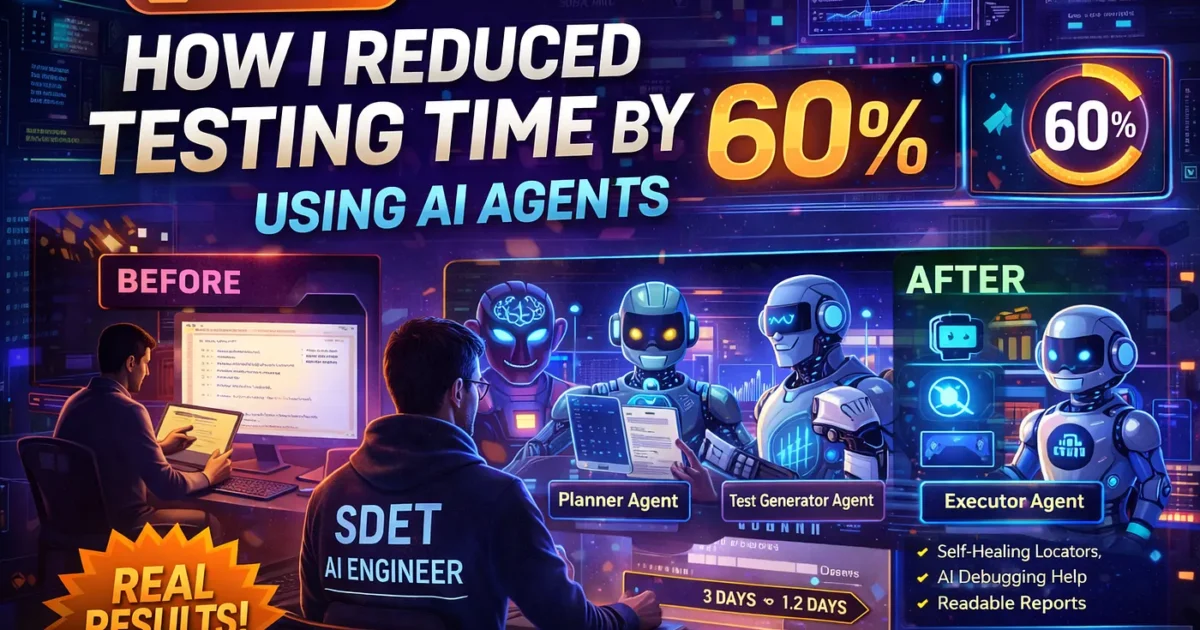
“We didn’t hire more testers…
We made our testing system smarter.”
This is not theory.
This is not a “future concept.”
👉 This is a real approach that changed how we test.
And if you understand this…
👉 You’ll never look at automation the same way again.
🧠 The Problem (Relatable to Every QA Team)
Before AI, our testing looked like this:
- 300+ regression test cases
- 2–3 days execution time
- Flaky UI tests (constant failures 😩)
- Manual debugging eating hours
- Reports nobody reads
⚠️ Reality Check
Every sprint:
👉 Testing became the bottleneck
👉 Releases delayed
👉 Team frustrated
We weren’t slow…
Our system was outdated.
🚀 The Shift: From Automation → Intelligence
Instead of writing more scripts…
👉 We redesigned the system using AI agents
🤖 What We Built (Architecture)
We created a multi-agent testing system:
1️⃣ Planner Agent
- Reads requirement / user story
- Breaks into test scenarios
2️⃣ Test Generator Agent
- Creates API + UI test cases
- Suggests edge cases
3️⃣ Executor Agent
- Runs tests (Pytest + API + UI)
4️⃣ Analyzer Agent
- Understands failures
- Suggests fixes
👉 Not just automation…
👉 Decision-making system
⚙️ Real Implementation (Simplified but Practical)
🔑 Step 1: AI Test Generator
def generate_test_cases(requirement):
    prompt = f"""
    Generate API test cases for:
    {requirement}
    Include edge cases and validations.
    """
    response = planner.generate_reply(
            messages=[{"role": "user", "content": prompt}]
        )
        return response
🌐 Step 2: Dynamic API Test Execution
import requests

def run_api_test(test_case):
    response = requests.post(
        test_case["url"],
        json=test_case["payload"]
    )
    return {
        "status": response.status_code,
        "response": response.json()
    }
🧪 Step 3: Smart UI Locator Handling
def find_element_with_fallback(driver, locators):
    for by, value in locators:
        try:
            return driver.find_element(by, value)
        except:
            continue
    raise Exception("Element not found")
🤖 Step 4: AI Failure Analysis
def analyze_failure(error):
    prompt = f"""
    Analyze this test failure and suggest root cause + fix:
    {error}
    """
return planner.generate_reply(
        messages=[{"role": "user", "content": prompt}]
    )
📊 Step 5: Human-Friendly Reporting
def generate_report(results):
    for test in results:
        status = "PASS" if test["status"] == 200 else "FAIL"
        print(f"{test['name']} → {status}")
🔥 What Changed (This is Where It Gets Interesting)
BEFORE ❌
- Manual test writing
- Static scripts
- Debugging = human effort
- Reports = raw logs
AFTER ✅
- AI-generated test cases
- Self-healing locators
- AI-assisted debugging
- Insightful reports
📉 Real Impact (Measured Results)
👉 Regression time reduced from 3 days → 1.2 days
👉 Flaky tests reduced by ~40%
👉 Debugging time reduced by ~70%
🎯 Final Outcome
Overall testing time reduced by ~60%
😈 What Most People Miss
We didn’t:
❌ Replace testers
❌ Remove QA team
❌ Stop writing tests
👉 We upgraded how testing works
🧠 The Real Insight
Speed doesn’t come from working faster…
It comes from removing unnecessary work.
🚀 What You Can Start TODAY
You don’t need a big team.
Start small:
🔥 Step 1:
Build AI test generator for 1 feature
🔥 Step 2:
Add fallback locators
🔥 Step 3:
Add AI failure explanation
👉 Even this puts you ahead of most engineers
💼 How This Changes Your Career
Instead of saying:
“I write automation scripts”
You say:
“I design intelligent testing systems”
👉 That’s how you move into top 10% engineers
💬 Let’s Talk
👉 What’s your biggest testing bottleneck right now?
👉 Would AI reduce your effort or add complexity?
Drop your thoughts 👇
🔥 Final Line
Anyone can run tests.
Very few can redesign how testing works.
Be the second one.
More Relevant Articles
- How I Reduced Flaky Tests by 40% Using Self-Healing Locators + AI
- The Architecture Mistake 90% of Playwright Projects Make And How the Top 1% Quietly Avoid it
- Autonomous Load Pipelines: GitHub Actions + Grafana k6 + GPT5 Run Your Tests Before You Even Commit