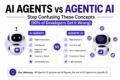
Software testing has always evolved alongside software development — from manual testing to automation, and now to AI-powered testing agents.
As applications become more complex and release cycles faster, traditional testing approaches struggle to keep up. This is where AI agents in software testing are transforming the game.
These intelligent systems can analyze, adapt, and execute tests with a level of speed and efficiency that was not possible before.
In this article, you will learn:
- What AI agents are
- How they are used in software testing
- Real-world use cases
- Why AI will not replace testers — but enhance them
What Are AI Agents in Software Testing?
AI agents are autonomous software systems that can:
- Perceive their environment
- Make decisions
- Take actions to achieve specific goals
In the context of software testing, AI agents can:
- Understand application behavior
- Automatically generate test cases
- Execute tests across environments
- Analyze results and detect patterns
- Learn from previous test runs
- Provide actionable insights to QA and developers
Unlike traditional automation scripts, AI agents are adaptive and self-improving, making them highly effective for modern architectures such as microservices and dynamic user interfaces.
Why AI Agents Are Important for Modern QA
Modern software systems involve:
- Frequent deployments (CI/CD)
- Complex APIs and microservices
- Dynamic frontends
- Large-scale user interactions
Traditional testing methods often fail due to:
- High maintenance effort
- Flaky test cases
- Limited coverage
- Slow execution cycles
AI agents solve these challenges by introducing:
- Intelligent automation
- Risk-based testing
- Continuous learning
Key Use Cases of AI Agents in Software Testing
1. Automated Test Case Generation
AI agents can analyze requirements, user stories, or code changes to automatically generate test cases.
Example:
An AI agent scans a Jira user story and generates:
- Functional test scenarios
- Edge cases
- Security validations
This reduces manual effort and improves test coverage.
2. Intelligent Test Execution
Instead of executing all tests every time, AI agents prioritize tests based on:
- Risk level
- Code changes
- Historical failures
- User behavior
This leads to faster and more efficient test cycles.
Popular tools include:
3. AI-Based Failure Analysis
AI agents can analyze:
- Logs
- Screenshots
- API responses
- System telemetry
They can identify root causes and even suggest fixes.
Example Insight:
“Test failed due to locator change from
submitBtntoconfirmBtn. Suggested fix applied.”
This significantly reduces debugging and triage time.
4. Self-Healing Test Automation
AI-powered frameworks can automatically fix broken tests by updating:
- UI locators
- Element attributes
- Timing issues
Examples:
This minimizes maintenance overhead and improves test stability.
5. AI-Powered Exploratory Testing
AI agents can simulate real user behavior and explore applications intelligently.
They can:
- Navigate UI flows
- Identify unexpected issues
- Detect usability problems
This brings a smarter version of exploratory testing into automation.
Real-World Example: AI Agent in CI/CD Pipeline
Imagine a modern CI/CD workflow powered by AI:
- Code is pushed to GitHub
- AI agent analyzes code changes
- New test cases are generated automatically
- Existing tests are optimized
- Tests run across browsers and environments
- Failures are analyzed instantly
- Jira tickets are created with suggested fixes
This creates a fully automated, intelligent testing pipeline with minimal manual effort.
How to Build an AI Testing Agent (Conceptual Architecture)
For engineers and architects, a basic AI testing agent includes:
Input Layer
- Code changes
- API contracts
- UI components
Intelligence Layer
- LLMs for understanding logic and requirements
Test Generation Layer
- Automated script creation using templates or code generation
Execution Layer
- CI/CD pipelines or cloud testing platforms
Learning Layer
- Historical test data
- User behavior analytics
Feedback Layer
- Integration with tools like Slack or Jira
This creates a continuous improvement loop for testing.
Will AI Replace Software Testers?
No.
But testers who use AI will outperform those who do not.
AI agents are designed to handle repetitive and time-consuming tasks, while human testers provide:
- Critical thinking
- Business understanding
- Context awareness
- User empathy
The future is not AI vs Humans.
It is AI + Humans working together to deliver better quality software.
Key Benefits of AI Agents in Testing
- Faster test execution cycles
- Reduced maintenance effort
- Improved test coverage
- Fewer flaky tests
- Real-time insights and analytics
Final Thoughts
AI agents in software testing are no longer experimental — they are becoming a standard in modern QA workflows.
If your current testing strategy relies heavily on manual scripts and brittle automation, it is time to evolve.
Start small:
- Use AI for test case generation
- Apply it to failure analysis
- Gradually move toward autonomous testing systems
The future of software testing is clear:
Intelligent, adaptive, and AI-driven.
And those who adopt early will lead the next generation of quality engineering.